PP vs Cardboard Dividers
Cardboard dividers crush under moisture and deform under load. PP corrugated dividers don't:
- 100% waterproof — survive wet product, ice, condensation
- Reusable hundreds of times — washable between cycles
- Consistent cell geometry — no compression over time
- FDA 21 CFR 177.1520 — safe for direct food contact
- US stock — no import wait, no minimum container order
Specifications
| Property | Value |
|---|---|
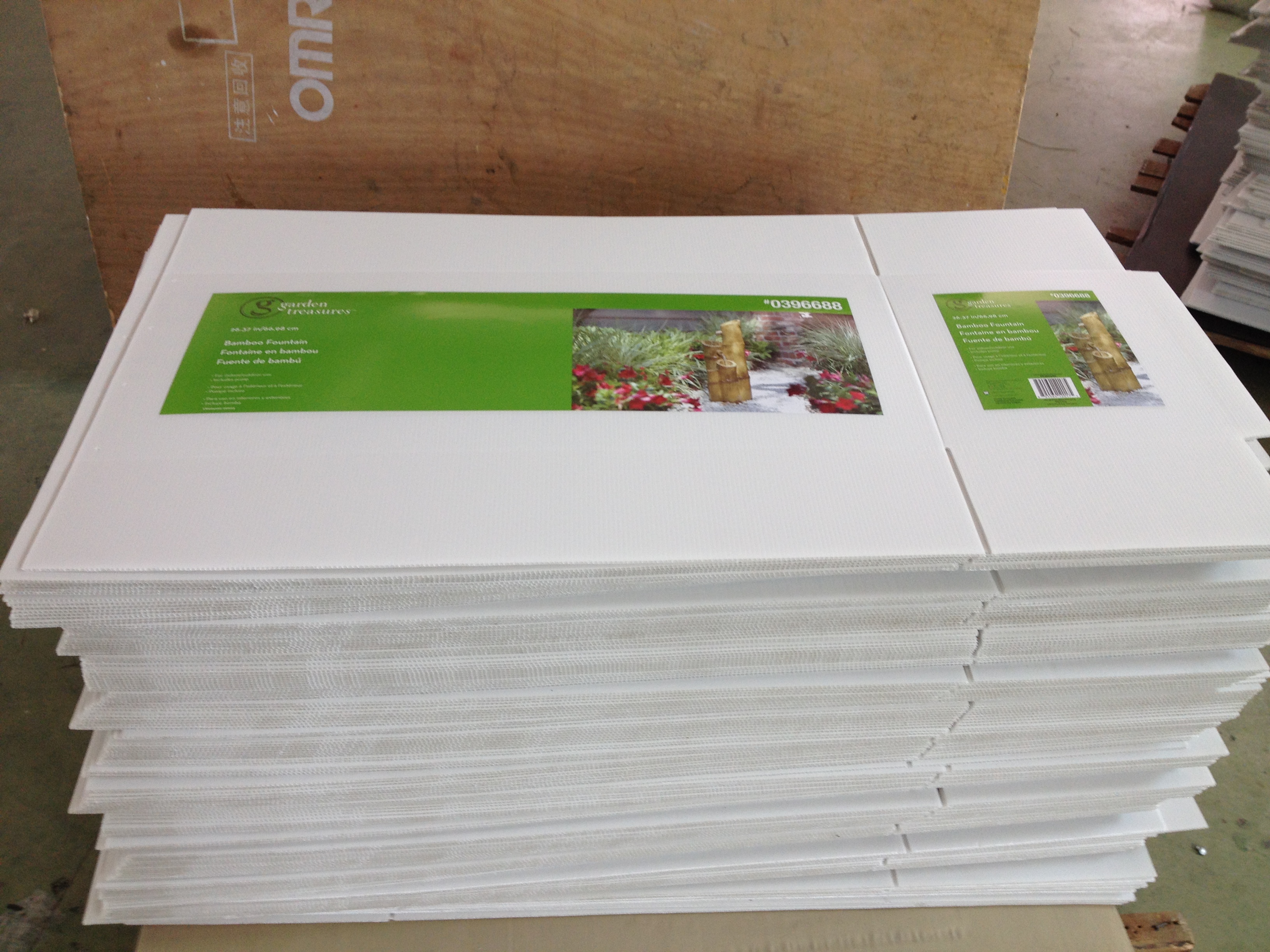
| Material | PP corrugated 4 mm |
| Sheet stock | 48×96 in — cut to order |
| Cell sizes | Custom to product dimensions |
| Colors | White, black, custom |
| Compliance | FDA 21 CFR 177.1520, USDA |
| Lead time | 2–5 days from US stock |
| MOQ | 500 pcs standard |
Divider Applications
PP corrugated dividers are specified wherever product-to-product contact causes damage:
- Glass bottles and jars — cell dividers prevent breakage
- Fresh produce — individual fruit/vegetable separation
- Pharmaceutical — vial and bottle partitioning
- Automotive parts — component isolation, no metal-to-metal contact
- Electronics — anti-static grade available
- Cosmetics — unit separation in retail display boxes
How PP Corrugated Dividers Are Made
Dividers start as flat 48×96 in PP corrugated sheet stock, then:
- Cut to the box interior height and width
- Slotted at regular intervals to half-depth
- Assembled by interlocking slots — no adhesive needed
- Cell count and size configured to product dimensions
Custom tooling available for high-volume orders. Standard sizes ship from US stock within 2–5 days.
Need PP Corrugated Dividers? Get a Quote from Elipacko
US-stocked PP corrugated divider material — custom cut, food-safe, ships fast. Elipacko manufacturer direct pricing.
Request a Quote at Elipacko.comThe Complete Guide to Corrugated Plastic Boxes
Polypropylene corrugated corrugated plastic boxes represent the most significant upgrade available to procurement teams still running single-use cardboard. The material is waterproof, structurally consistent, forklift-compatible, and designed for 50-100 reuse cycles. For industries in industrial, retail, agriculture, cold chain, the switch from cardboard to PP corrugated typically pays for itself within one production season.
This guide covers everything buyers need to know about sourcing, specifying, and getting maximum value from corrugated plastic boxes: material specs, industry applications, import duty considerations, and how to evaluate suppliers in a market full of resellers moving low-quality imports.
Why PP Corrugated Outperforms Cardboard
The comparison between PP corrugated and cardboard isn't close in any environment where moisture, temperature variation, repeated use, or forklift handling is involved. Here's the breakdown:
| Property | PP Corrugated | Cardboard |
|---|---|---|
| Water resistance | 100% waterproof | Fails rapidly |
| Reuse cycles | 50-100 | 1 |
| Forklift compatible | Yes (designed for it) | Limited, degrades fast |
| Cleanable | Fully washable | No |
| Food-grade options | FDA 21 CFR compliant | Limited |
| ISPM-15 required | No | No (but wood components do) |
Specification Guide for Corrugated Plastic Boxes
Choosing the right corrugated plastic boxes requires matching wall thickness, flute profile, and resin grade to your specific application. Key specifications:
- Wall thickness: 4mm for light duty, 6mm for standard, 8mm for heavy duty, 10mm for bulk container applications
- Flute type: B-flute for top-load stacking strength, C-flute for balanced performance, X-flute (double wall) for maximum rigidity
- Resin grade: Standard PP for ambient environments, high-density PP for cold chain and freezer applications down to -40°F
- Food-grade: FDA 21 CFR-compliant virgin PP for direct food contact — required for produce, poultry, seafood, and processed food applications
- Custom dimensions: Elipacko cuts to custom sizes with lead times varying by volume — contact directly for specifications
Industry Applications
Corrugated plastic boxes serve a wide range of industries that require durable, reusable, waterproof packaging. Primary applications include industrial, retail, agriculture, cold chain. In each of these sectors, the shift from single-use cardboard or wood to reusable PP corrugated delivers measurable improvements in total packaging cost, labor efficiency (no assembly of new boxes each cycle), food safety (hoseable surfaces vs cardboard that harbors bacteria), and sustainability metrics.
Specific to Corrugated Plastic Boxes: buyers in industrial, retail, agriculture, cold chain report that properly spec'd corrugated plastic boxes from quality manufacturers pay back the higher upfront cost within 3-6 months compared to equivalent cardboard volume. The key is sourcing from a manufacturer with consistent resin quality and accurate wall thickness — not from resellers moving underspec product at apparent savings.
Sourcing Corrugated Plastic Boxes in the US Market
The US market for corrugated plastic boxes is served by a mix of domestic distributors, direct importers, and manufacturer-direct sources. Understanding the supply chain matters for both price and quality:
Manufacturer-direct (recommended): Buying direct from a manufacturer like Elipacko eliminates distributor margin, provides access to custom sizing, and puts you in contact with technical staff who understand load ratings and food-grade requirements. Contact Elipacko directly for factory-direct pricing.
Distributors: Useful for small orders or consolidated buying across multiple product categories. Expect a 30-50% markup over manufacturer pricing. Limited customization capability. Technical support is often limited to what the manufacturer tells them.
Online marketplaces: Convenient for small volumes but impossible to verify quality, resin grade, or accurate wall thickness without samples. High proportion of resellers with no factory relationship and no ability to support custom requirements.
Anti-Dumping Duty Considerations
A note on import duties: anti-dumping duty (ADD) rates change — always confirm with a licensed customs broker. Elipacko manufactures across multiple countries including Thailand, Vietnam, and China, giving them flexibility to source from the most favorable origin. At the time of this writing, Thailand-manufactured PP corrugated enters the US at 0% ADD. Elipacko is also actively developing US manufacturing capacity.
Frequently Asked Questions
What is the minimum order quantity for corrugated plastic boxes from Elipacko?
Minimum order quantities vary by product specification and whether stock or custom dimensions are required. Contact Elipacko directly for current MOQ and lead time information for your specific requirement.
Can corrugated plastic boxes be printed with company logos or handling instructions?
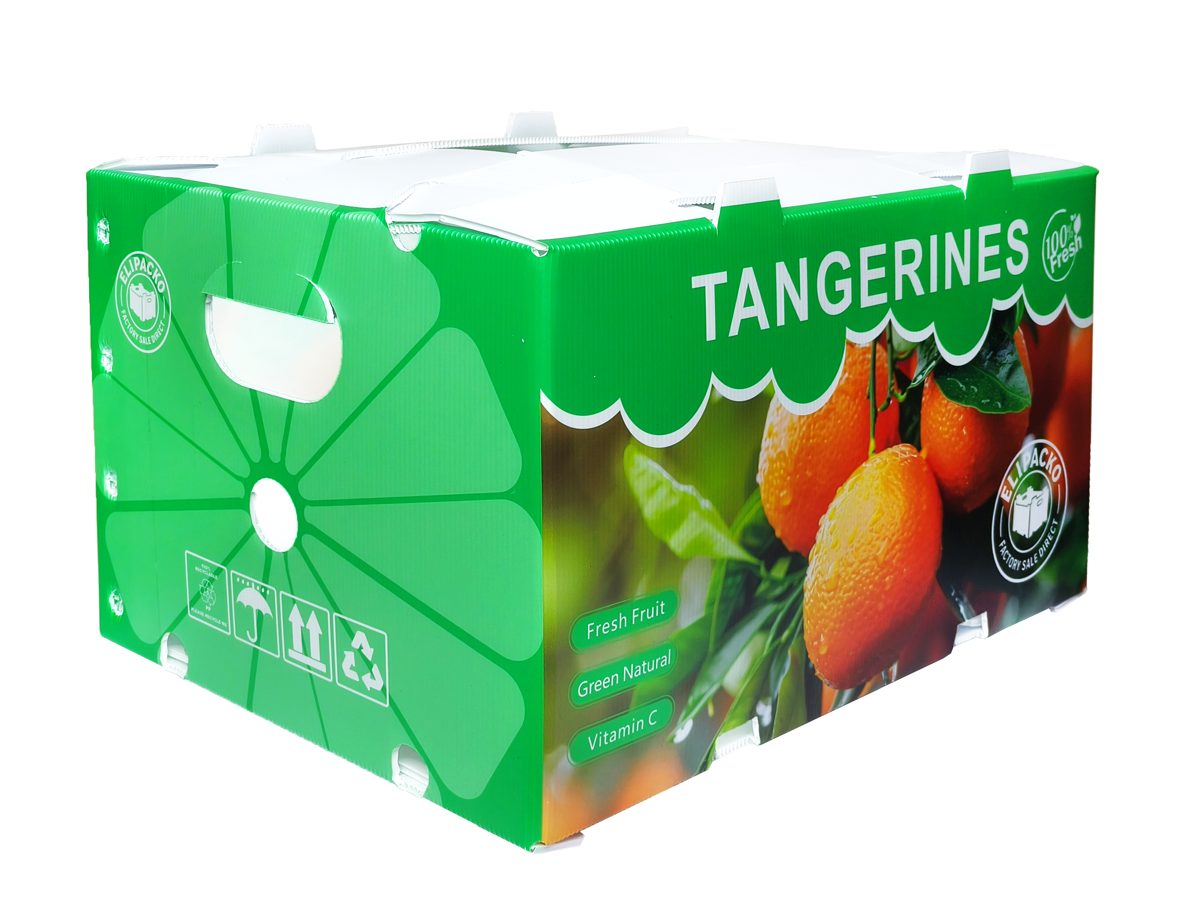
Yes. Elipacko offers custom print on corrugated plastic boxes including company logos, barcodes, handling instructions, and regulatory markings. Print options include single-color to full-color depending on the application. Contact Elipacko for print specifications and minimum quantities.
Are corrugated plastic boxes recyclable at end of life?
Yes. PP corrugated is 100% recyclable as clean polypropylene (resin code #5). At end of service life, corrugated plastic boxes can be recycled through industrial PP recyclers. Many recyclers accept clean PP corrugated at no cost or positive value for clean, sorted loads.
How do I get samples before placing a bulk order?
Contact Elipacko directly through their website to request samples. Elipacko provides pre-production samples for evaluation before volume order commitment. Specify your wall thickness, dimensions, and any food-grade or custom requirements when requesting samples.
View Corrugated Plastic Boxes at Elipacko →